
-
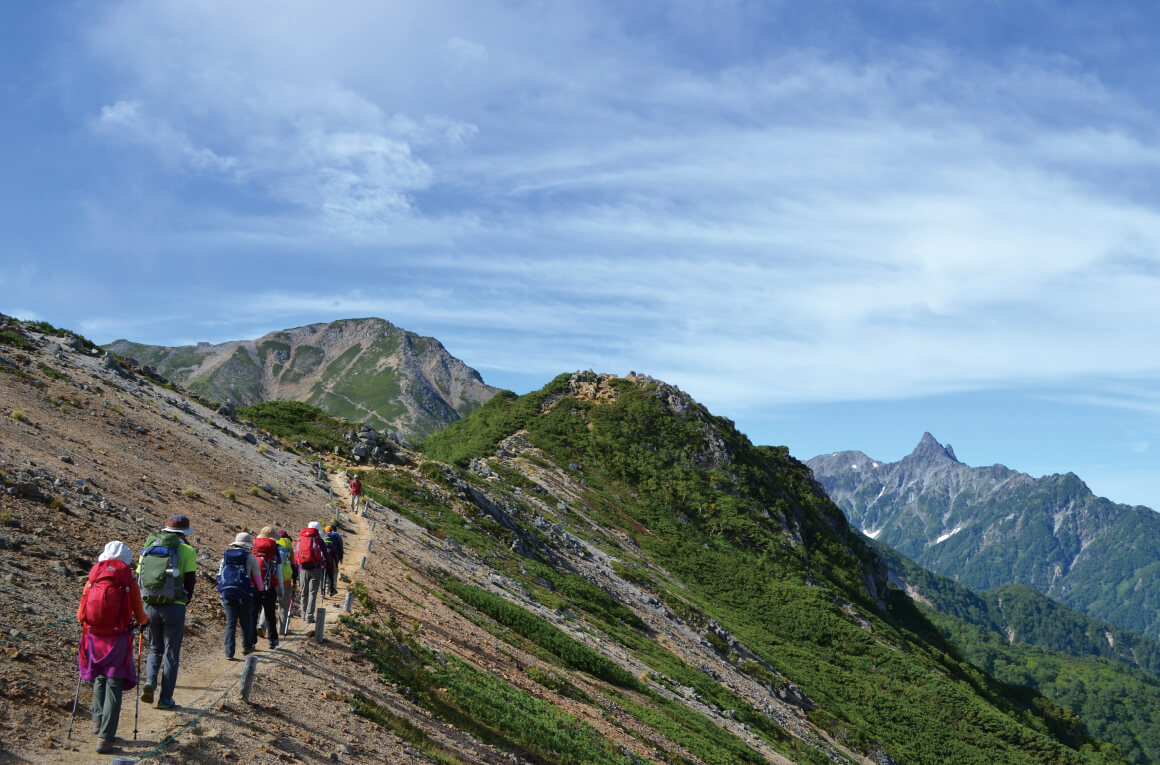
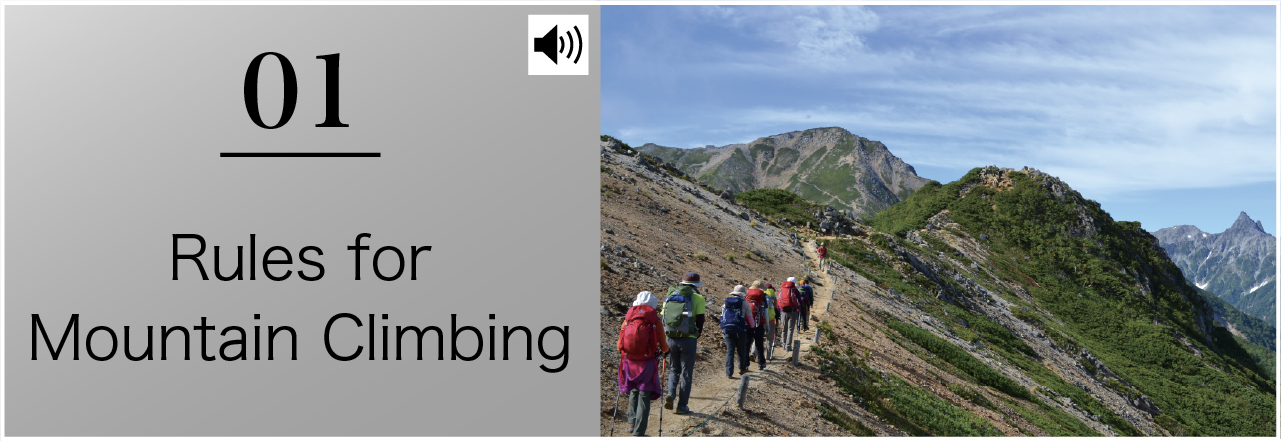
Here are some important rules for safe mountain climbing in the Northern Alps.
From this point on, many areas lack mobile phone reception signals.
Please bring a paper map, as well as your mobile phone, to check your route.
Be sure to submit a climbing plan before you start.
If you have not submitted one yet, you can go online and send it to the Nagano Prefecture website. Please do this now.
Check the route conditions, temperature, and weather before climbing. Also, be sure to check the opening hours of mountain lodges on their official websites.
Please be aware that information on social media may not be accurate.
For your safety, plan your climb to arrive at your destination by 3 pm at the very latest. Allow for extra time in your schedule. It is also a good idea to have a spare day in your plan, in case of bad weather or changes in your condition.
Please take all your garbage home with you.
This helps protect nature and keep bears from approaching.
Do not leave any garbage behind.
Follow the rules and enjoy your mountain climb. -
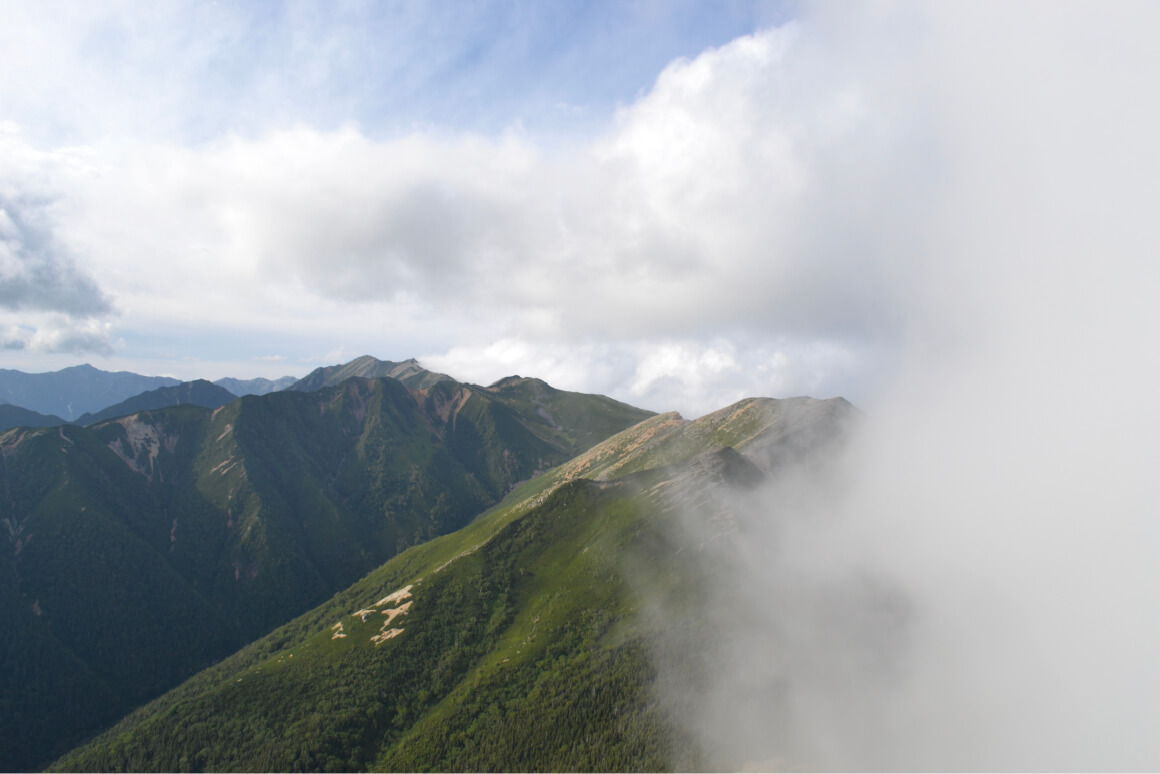
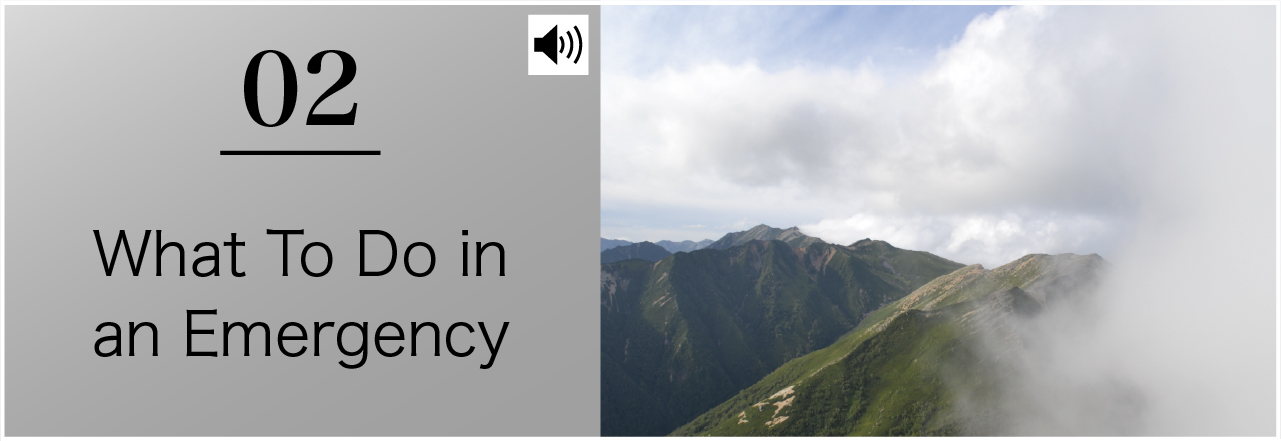
For safe mountain climbing, the most important thing is to avoid emergencies.
Prepare yourself well in advance, taking precautions to prevent accidents.
Never step off of the trail. To avoid slipping and falling, use safe walking techniques, such as flat-footing.
When there is an emergency, contact the police immediately. The number throughout Japan is 110.
However, there are many areas without mobile phone signals.
That is why you must submit a climbing plan to the Nagano Prefecture website before your climb.
Also, be sure to inform your family or the staff at your lodgings of your schedule in advance.
Check your route before starting. This is in order to find safe places to shelter in case of disasters such as heavy rain or earthquakes. Stay away from cliffs and rivers. Watch out for falling rocks and landslides.
If you are injured or feel unwell, take a rest. Please do not push yourself. If you get lost, go back the way you came. -
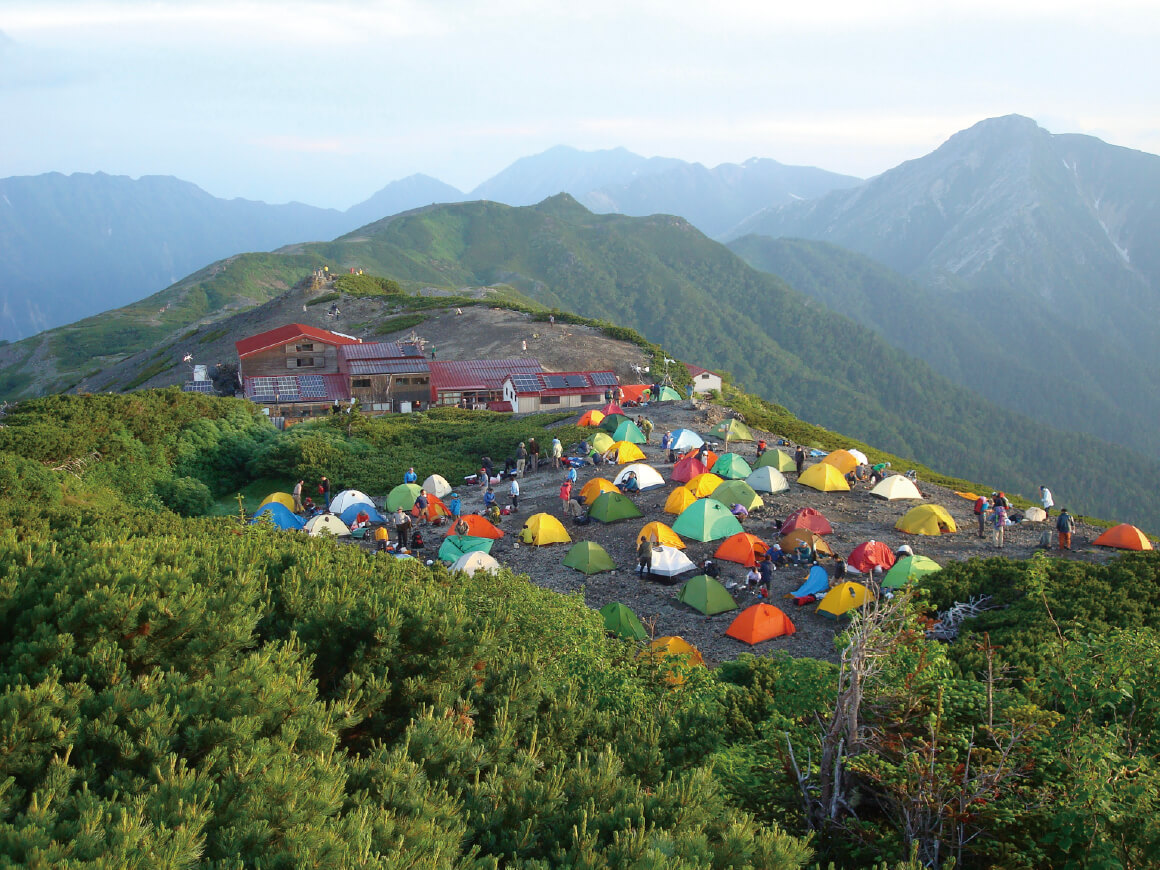
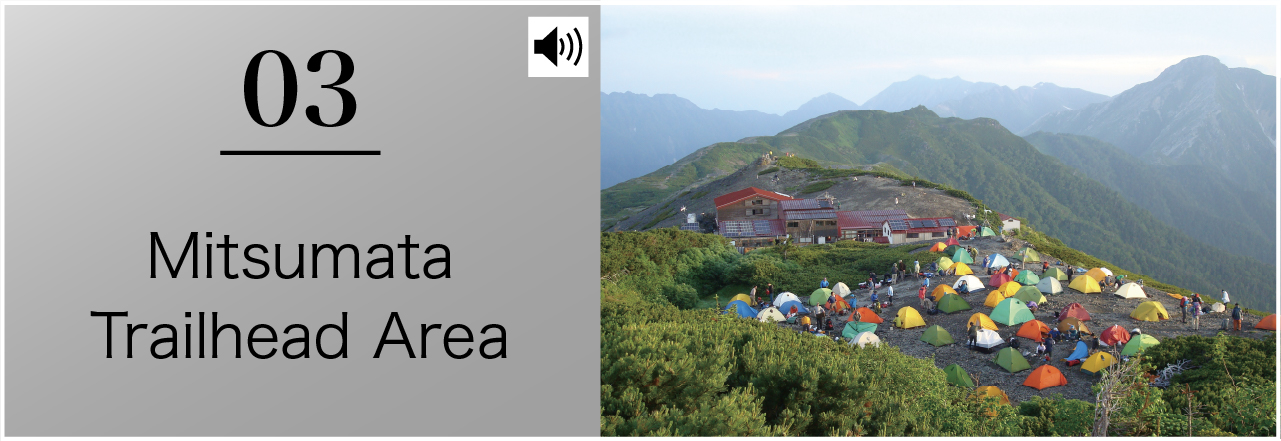
This is the Mitsumata Trailhead Area, the starting point for climbing Mount Chogatake. Rising 2,677 meters above sea level, it takes about 5 hours to reach the summit.
From the top, take in a spectacular view stretching from the mountain ranges of Yari-Hotaka to Ushiro-Tateyama. This is a popular destination among mountain climbers.
In early spring, a butterfly-shaped snow pattern appears on the southeastern slope of the mountain. That is how Mount Chogatake got its name, since the cho at the beginning is “butterfly” in Japanese.
Along the trail, you may find a tree that looks just like the face of Godzilla.
Near the summit, colorful alpine flowers welcome you. You can see shinano kimbai, a local variety of the globe flower, as well as meadow buttercups called miyama kimpoge.
There is also a pond where you may find salamander eggs.
This mountain is a habitat for the Japanese rock ptarmigans known as raicho.
In spring, they have pure white feathers. Then in summer, you may see them with their chicks, a delightful scene for climbers.
Just a few minutes’ walk from the summit, there is a mountain lodge named Chogatake Hutte.
You can book a room to stay there overnight, with options to include dinner and breakfast in your plan. They also offer a variety of lunches and drinks on the menu.
Many visitors look forward to dishes featuring local rice and homemade miso made with soybeans from Azumino.
At the shop in the lodge, there are original T-shirts and limited items only found at this location. Be sure to check them out! -
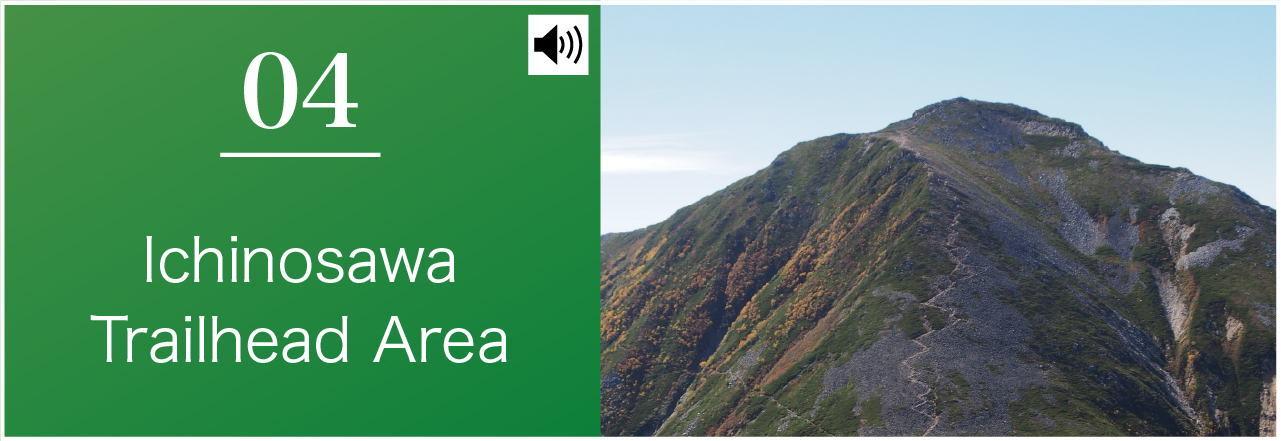
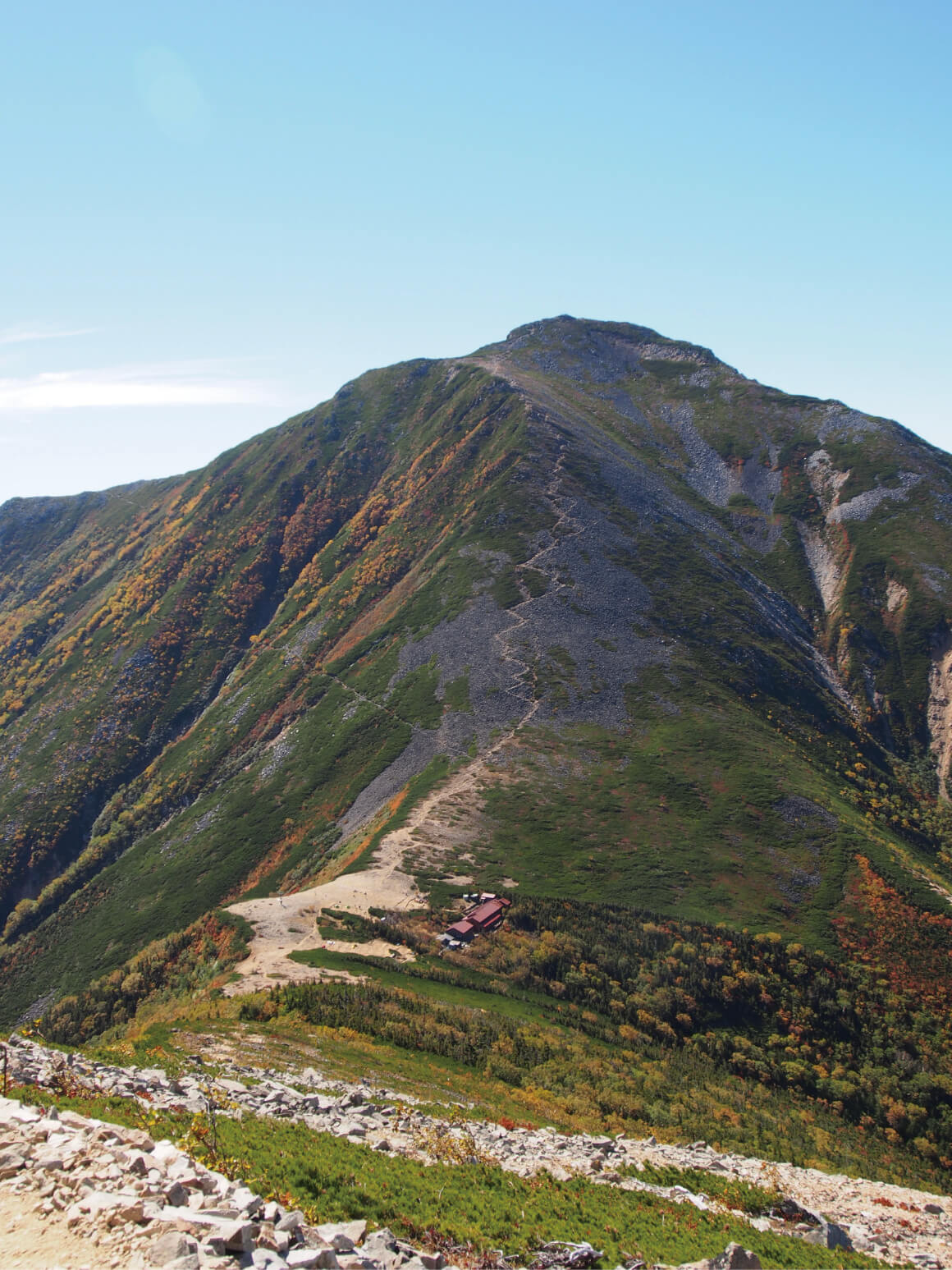
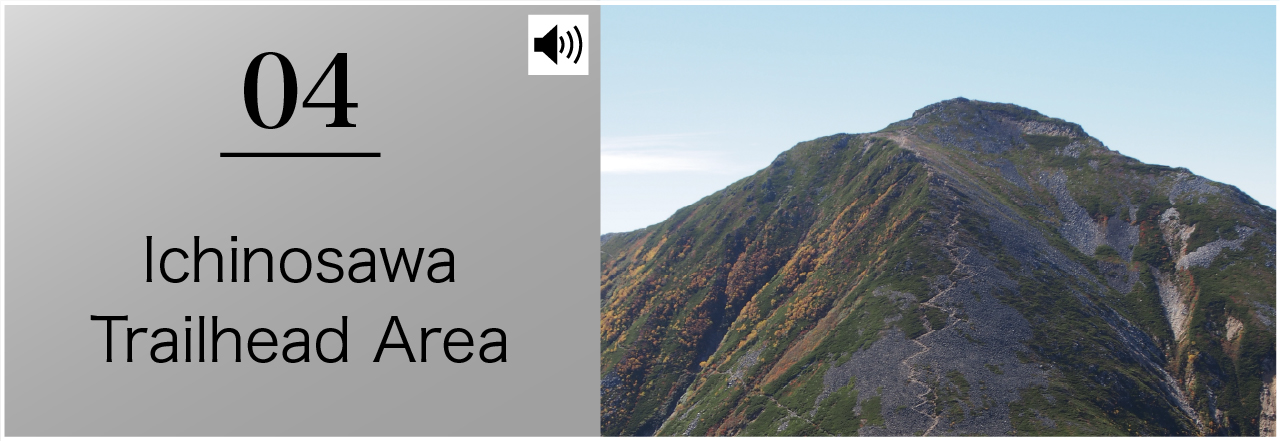
Ichinosawa Trailhead is the starting point of the route leading to Mount Jonendake, standing at 2,857 meters above sea level.
Listed among the 100 best mountains of Japan, it is often called the Symbol of Azumino.
The trail follows a clear mountain stream, allowing hikers to enjoy a relaxed climb under the shade of oak and beech trees.
Along the way, there are several water spots where you can quench your thirst. At a place called Munatsuki Haccho, you will be welcomed by alpine flowers. These include kuruma yuri, an East Asian herb in the lily family, and shinano kimbai.
Continuing through forests of Veitch’s fir and Erman’s birch, you will arrive at Jonen Lodge in about 4 and a half hours from the trailhead. This is the third oldest mountain lodge in the Japanese Alps.
From here, you can enjoy stunning views of the Yari-Hotaka mountain range. With its abundant alpine plants and butterflies, this place is well-loved by writers and photographers.
For lunch, a wide variety of dishes is available, such as pizza and ramen, as well as curry and rice.
There is also a nice selection of café items, including original blended coffee from a shop in Azumino City.
From Jonen Lodge, climb over a rocky granite ridge to reach the summit. It will take about 1 and a half hours.
To the west lies Yari-Hotaka mountain range, with peaks rising over 3000 meters.
At the summit, a breathtaking 360-degree panoramic view awaits you. Stop and take in Mounts Fuji, Yatsugatake, and Tsurugidake, as well as the Ushiro-Tateyama mountain range. -
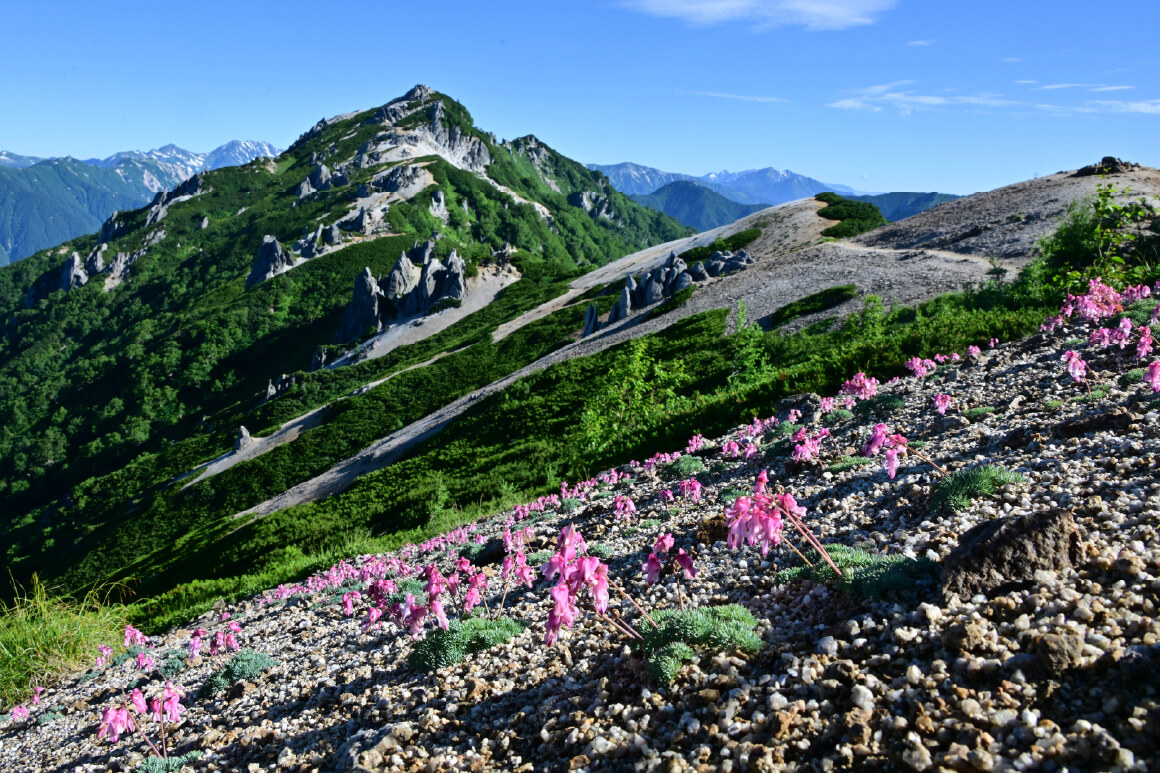
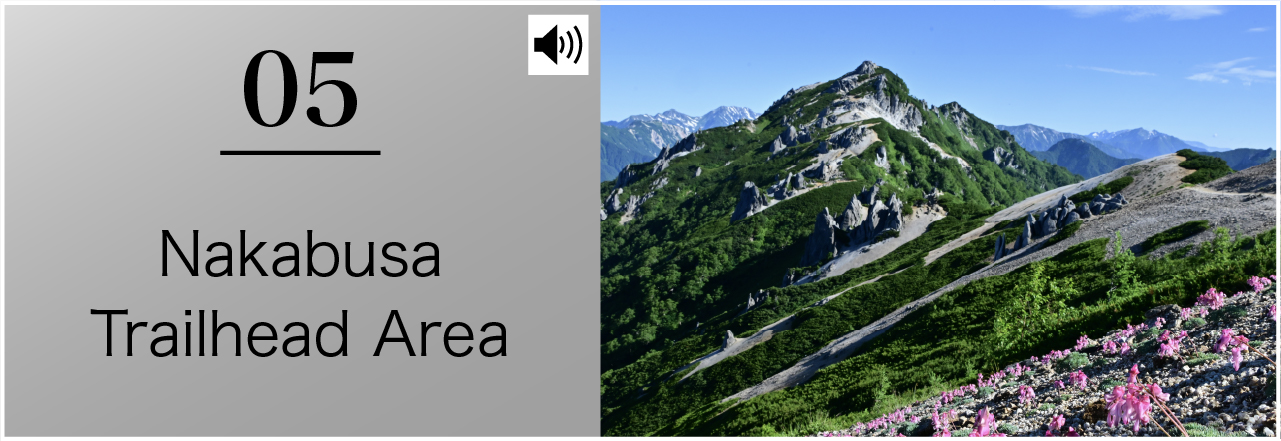
Nakabusa Tsubakurodake Trailhead is the starting point for Mount Tsubakurodake. This peak is also known as “the Queen of the Japanese Alps.”
Standing at 2,763 meters above sea level, it is about a 5 hour hike up to its summit. Tsubakurodake is famous for the beautiful contrast of its white granite rocks and green Japanese pine.
Snow remains on the trail until mid-June, so climbers need to bring equipment such as ice axes and crampons.
Be aware that trekking along the ridgeline to Mount Yarigatake can also be dangerous until early July.
Around late June, the chicks of the Japanese rock ptarmigan known as raicho start to hatch. Colorful alpine flowers also begin to bloom then.
In July, large colonies of dicentra peregrina, a flower known as komakusa in Japanese, appear near the summit.
There are also popular photo spots featuring uniquely-shaped granite rocks. These rocks are nicknamed “Dolphin, Gorilla,” and “Glasses.”
From the summit and Enzanso Mountain Lodge, you can enjoy spectacular 360-degree panoramic views. Take in the mountain ranges of Yari-Hotaka, Jonen, Hakuba, Tsurugi-Tateyama, and even Mount Fuji.
Enzanso Mountain Lodge is located along the ridge of Mount Tsubakurodake. Established in 1921, it has a history of over 100 years.
Visitors can savor meals made with local Azumino ingredients, such as rice, miso, and Nozawana pickles. Their original T-shirts and bandanas are also popular souvenirs.
At this lodge, breathtaking views welcome you from sunrise to sunset. Please take your time and have a restful stay there.